Lyrik Back Bay, Boston · Social & Digital Brand Strategy · 2023–Present
The brief, in its simplest form, was this: build a brand for a building at an address that had never existed. Not a rebrand. Not a relaunch. A brand built from nothing — for a place that was still, technically, air.
Lyrik Back Bay is an air-rights development, constructed above the Massachusetts Turnpike in Boston’s Back Bay neighborhood. It is the first project of its kind in over 40 years, an engineering feat built literally over one of the city’s most trafficked highways. That is a remarkable fact. It is also, as a brand story, almost entirely useless to the public.
Nobody moves to a neighborhood because of air rights. Nobody comes to a watercolor class because of structural engineering. The challenge wasn’t explaining what Lyrik was built on. It was building something worth coming to, and then making sure Boston knew it existed.
The strategy
We started with what the project was giving back. Boston’s Big Dig had, for decades, claimed space in the city, displacing, dividing, disrupting. Lyrik was built on that reclaimed land. The framing became less about what the developer had built and more about what the neighborhood had gotten back: a public plaza where live music plays on summer evenings, where watercolor classes fill up on weekends, where kids come for music classes and neighbors linger over drinks at Rosa y Marigold and coffee from George Howell. Space that belonged to the public, returned to the public.
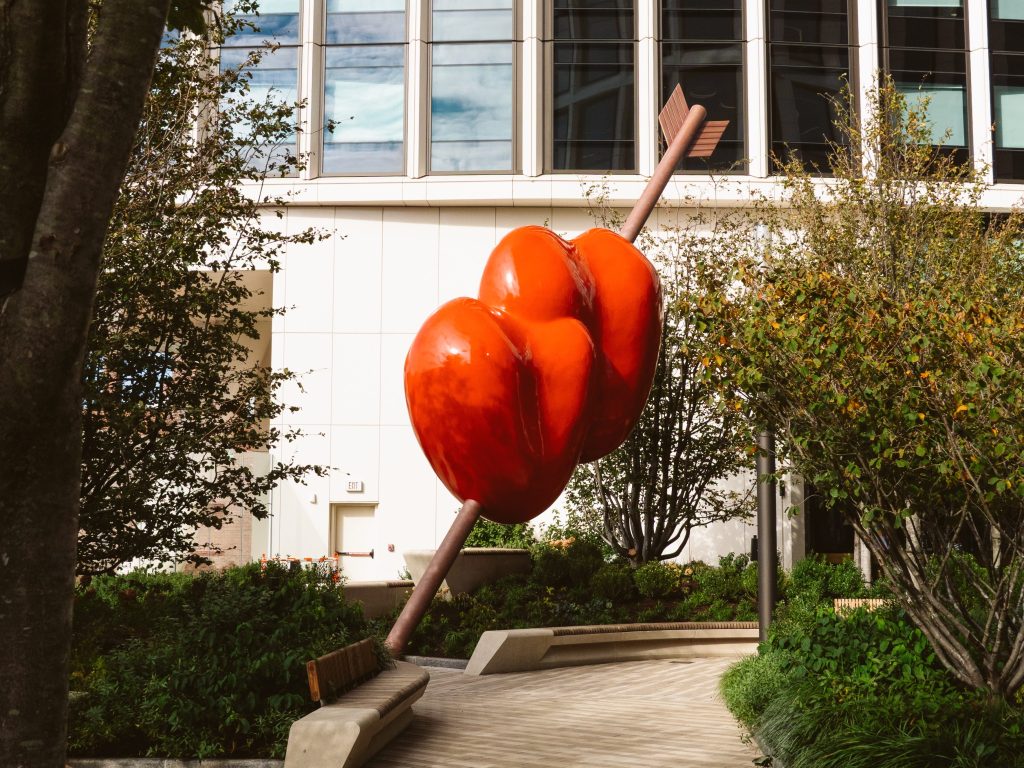
As cars drive under the building on the highway, they pass a 30-foot piece of public art, Gaetano Pesce’s Double Heart. It asks a question before it answers one. That’s the brand in physical form, curiosity first, destination second. The digital strategy followed the same logic: lead with the life happening at Lyrik, and let the architecture be the backdrop.
Lyrik is the spunky, everyone-knows neighbor. She loves to dance and go out for dinner with her girlfriends. She writes a blog and rides her bike to work.
That’s how I describe Lyrik’s brand personality — and it shaped every content decision. Not polished developer-speak. Not luxury residential positioning. A person you’d actually want to live next to, eat with, run into at a concert. Warm, culturally curious, plugged into the city but never trying too hard.
The moment it clicked
There’s a particular kind of validation that comes not from a campaign you planned, but from something that finds its own way. It came in the form of a viral video, a watercolor workshop at Lyrik, filmed and shared by an influencer I hadn’t hired, hadn’t briefed, hadn’t even met. She found the event because the digital infrastructure was there: the right information, on the right platforms, framed in a way that made the event feel worth attending and worth sharing. She showed up. She filmed it. It spread.
That video didn’t go viral because of a paid strategy. It went viral because the community we had been building slowly, carefully, and consistently had become real enough that strangers wanted to be part of it. That’s the difference between a brand and a marketing campaign.
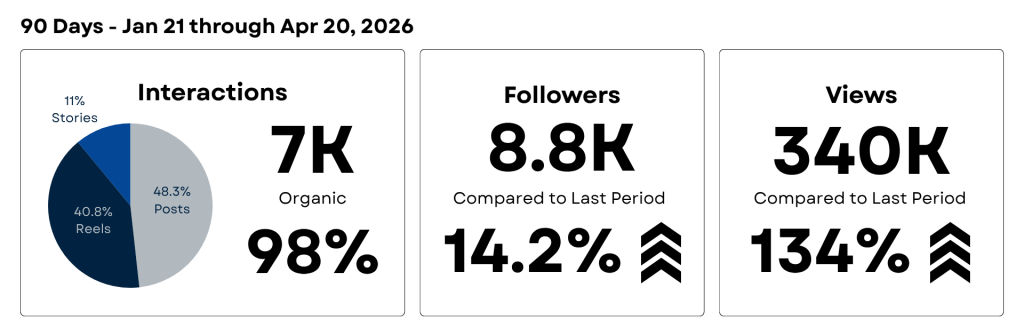
Growth has come through collaborations around restaurant openings, the Boston Marathon, cultural programming, and consistent storytelling that treats Lyrik as a neighborhood character rather than a real estate asset. The audience is Boston — people who live nearby, work in Back Bay, or simply follow the city’s cultural pulse. The content meets them where they are.
 Guest House
Leave a comment